

Change of position










China is tasked with promoting the innovative development of its trade over the next five years
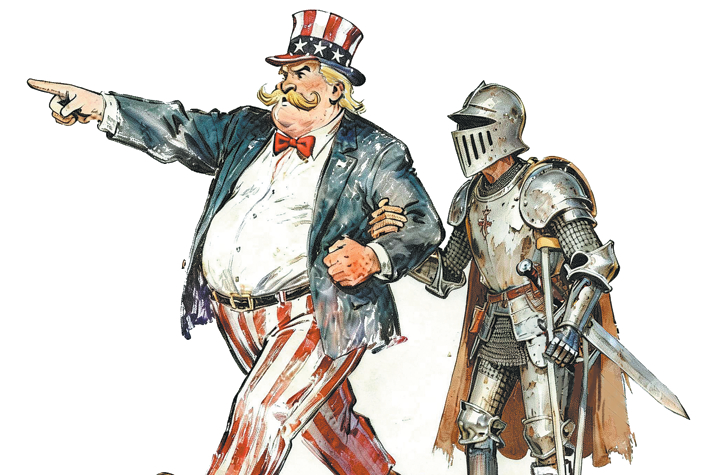
China's role in international production networks and global market competition is undergoing a profound shift. The country is moving away from relying mainly on labor and resource factors toward greater adoption of technology, capital, data and other high value-added inputs. Amid the restructuring of the global industry chains and changes in the international economic and trade rules, China faces pressure from the policy shifts of some developed economies, which have squeezed cooperation space to a certain extent.
Still, China's solid economic foundation, multiple advantages, strong resilience and vast potential remain unchanged, as do the fundamentals underpinning its long-term growth. In this new environment, China should take a more proactive approach to win-win opening-up, coordinate the domestic and international dimensions, and promote smooth, mutually reinforcing domestic and international circulation.
Domestically, China should continue advancing high-level self-reliance in science and technology to drive industrial upgrading. Priority can be placed on helping industries with comparative advantages — especially manufacturing — move higher up global value chains, break through technological bottlenecks at critical links, and strengthen global competitiveness. While bolstering indigenous innovation, China must stay committed to openness, expand exchanges in education, science and technology, integrate more deeply into global innovation networks and leverage international innovation resources.
Meanwhile, greater emphasis should be placed on imports and keeping pace with the emerging trends in goods trade. First, China should build a more resilient network of trading partners and advance export-market diversification, consolidating ties with neighboring economies while expanding cooperation with countries in Latin America, Africa and the Middle East to optimize the global layout of its goods trade. Second, it is important to expand imports in a proactive manner, and improve the structure of import sources and categories. Alongside greater imports of high-quality consumer goods to meet upgrading demand, the nation must ensure stable imports of energy, resources and key agricultural products to enhance its supply chain security. Third, the green, low-carbon transformation of its goods trade should be accelerated. Measures can be adopted to promote the country's alignment with international standards, regulations, inspection and quarantine and certification systems related to the green trade, and seek to follow, or even lead the global green trade development trends.
Externally, the country should deepen regional trade cooperation and attach greater importance to trade with neighboring countries and regions, which are vital to China's security and prosperity. During the 15th Five-Year Plan period, China should place its neighboring region at the center of its opening-up agenda, use systematic thinking to improve existing bilateral and multilateral cooperation mechanisms, strengthen infrastructure connectivity, and jointly build economic corridors and overseas industrial clusters. It is also important to support the development of BRICS cooperation and advance pragmatic cooperation under mechanisms such as the Shanghai Cooperation Organization and the Forum on China-Africa Cooperation, expanding channels for international cooperation.
Achieving higher volume and better quality in trade requires stronger top-level design and deeper substance in bilateral and multilateral cooperation. At the top-level design stage, a key step is to enhance industrial alignment and strategic coordination with neighboring economies to gradually build a more resilient and competitive regional industrial chain in which China plays a key hub role. The country should accelerate the construction of the New International Land-Sea Trade Corridor, improve multi-level and integrated infrastructure networks, and broaden and optimize economic and trade cooperation across Eurasia. Cooperation can also be expanded into emerging sectors such as the digital economy, green and low-carbon development and public health. It is also imperative to strengthen people-to-people exchanges and cultural interaction, facilitating two-way mobility for employment, education and tourism.
China's services trade has grown from scratch to become one of the world's largest, delivering notable achievements that have strongly supported the country's push toward becoming a major trading nation. At the same time, its services trade still faces challenges ranging from internal structural adjustments to external uncertainties. A persistent deficit remains, and there is room for greater competitiveness. Furthermore, the international economic and trade landscape is undergoing profound realignment, and global production and supply chains are being reshaped. Tariff wars and trade wars, in particular, have exacerbated external uncertainties surrounding the development of its trade in services.
In the 15th Five-Year Plan period (2026-30), accelerating innovation in the services trade is essential to advance high-level opening-up. The nation must seize strategic opportunities and convert its strengths in industry, technology and talent into drivers for the high-quality growth of its services trade. It is important to further systemic reforms that span institutional design, openness and regulatory innovation. Efforts should advance simultaneously across three tracks — reinforcing advantages, addressing weak links and internationalizing potential sectors — while expanding imports of quality services, boosting the global competitiveness of service exports, and nurturing new engines for its services foreign trade.
China is steadily advancing high-standard institutional opening-up in digital trade, working to establish efficient, secure and well-regulated mechanisms for cross-border data flows, providing strong institutional guarantees for deeper participation in global digital governance and for enhancing international competitiveness. Policy measures can focus on the following areas.
First, it is important to accelerate the development of platforms and strengthen industrial cultivation. China should further expand the role of national digital service export bases as key carriers and innovation hubs, build high-standard digital-trade demonstration zones, and form several digital industry clusters with global impact. Stronger measures must be taken to foster new advantages in the trade of digital products, improve the quality of the digital services trade, and expand exports of emerging digital technology services such as cloud computing, big data and artificial intelligence, shaping a modern and well-structured digital trade system.
Second, improve statistical systems and strengthen institutional safeguards. Due to the intangible nature of digital trade — particularly digital services — statistical measurement presents difficulties. Thus it is necessary to continuously improve the statistical monitoring system for digital trade, strengthen the protection of digital intellectual property rights and perfect the systems for cybersecurity and personal information protection.
Meanwhile, emphasis should be placed on the systematic cultivation and high-level recruitment of talent in the digital domain to build a multi-tiered digital talent system. The nation must deepen the integration of industry and education, encourage collaborative education between universities and digital enterprises, and strengthen the construction of academic disciplines and majors related to the digital economy. Meanwhile, it should put in place more open mechanisms for attracting high-level overseas digital talent and managing their employment in China.
Third, it is imperative to deepen international cooperation and take part in international rule-making. China should actively participate in rule consultations, such as the World Trade Organization e-commerce negotiations and the Digital Economy Partnership Agreement. Furthermore, it is necessary to continuously deepen bilateral and regional digital economic and trade cooperation to promote the establishment of an open, inclusive, fair, just and non-discriminatory environment for the development of the digital economy, thereby enhancing China's influence in the regional digital governance system.
The author is the president of the University of International Business and Economics. The author contributed this article to China Watch, a think tank powered by China Daily.
The views do not necessarily reflect those of China Daily.
Contact the editor at editor@chinawatch.cn.