


Robotics, AI innovations put elderly care on fast track
Aging population benefits from policy support, development of smart devices, services










Sitting on a sofa at his home in Beijing's Haidian district, a man in his 90s contemplated his next move as he played chess with an artificial intelligence-powered robot. His AI opponent studied the pieces on the board closely, strategized, and occasionally engaged in casual conversation with the elderly man.
Shen Tu, a financial professional, said he gifted the AI robot, named Sense, to his chess-loving grandfather about a year ago, because he was too busy to play. The robot, purchased for around 2,000 yuan ($285), offers companionship and has brought his grandfather great joy, he said.
"On weekends, the whole family takes turns to play chess with Sense, which has in a way strengthened our bond, as we get to spend some quality time together," Shen added.
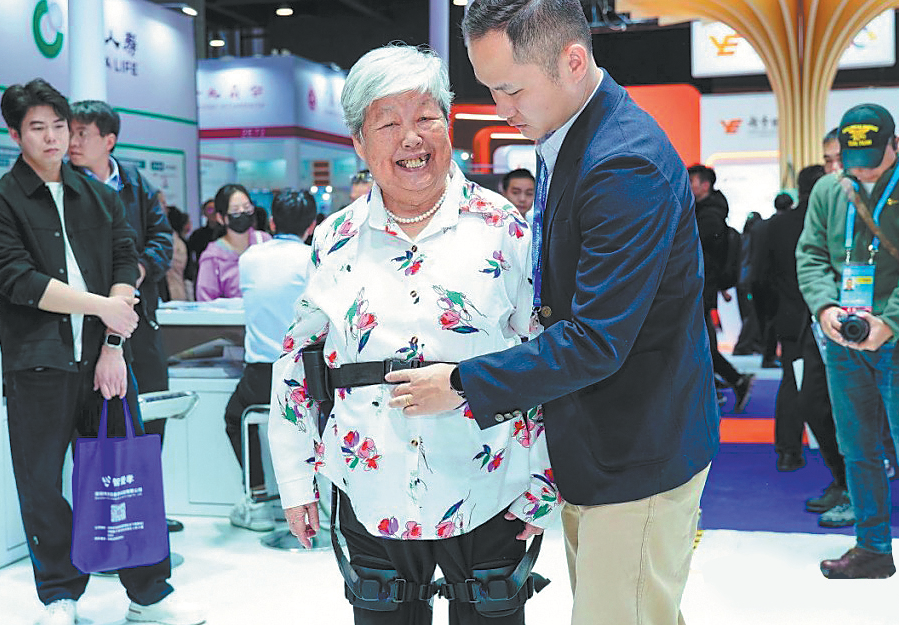
Companionship is one of the many roles AI-powered robots in China have been programmed to master. In Shenzhen, Guangdong province, such robots provide mobility assistance for seniors, patrol rooms at elderly care institutions, and even offer moxibustion therapy in nursing homes, highlighting an AI revolution in elderly care taking place in the country.
According to data from the Ministry of Civil Affairs, China's population age 60 and above reached 310 million by the end of 2024, accounting for 22 percent of the total population. Among them, nearly 35 million have lost the ability for self-care, and that number is expected to rise to 46 million by 2035.
As conventional elderly care models face numerous challenges, including a shortage of professional caregivers, a lack of service efficiency and difficulties in meeting personalized needs, robots that integrate cutting-edge technologies such as AI and the internet of things are becoming a core support force for smart elderly care.