

Solidarity and cooperation needed to uphold intl law in face of lawless US: China Daily editorial









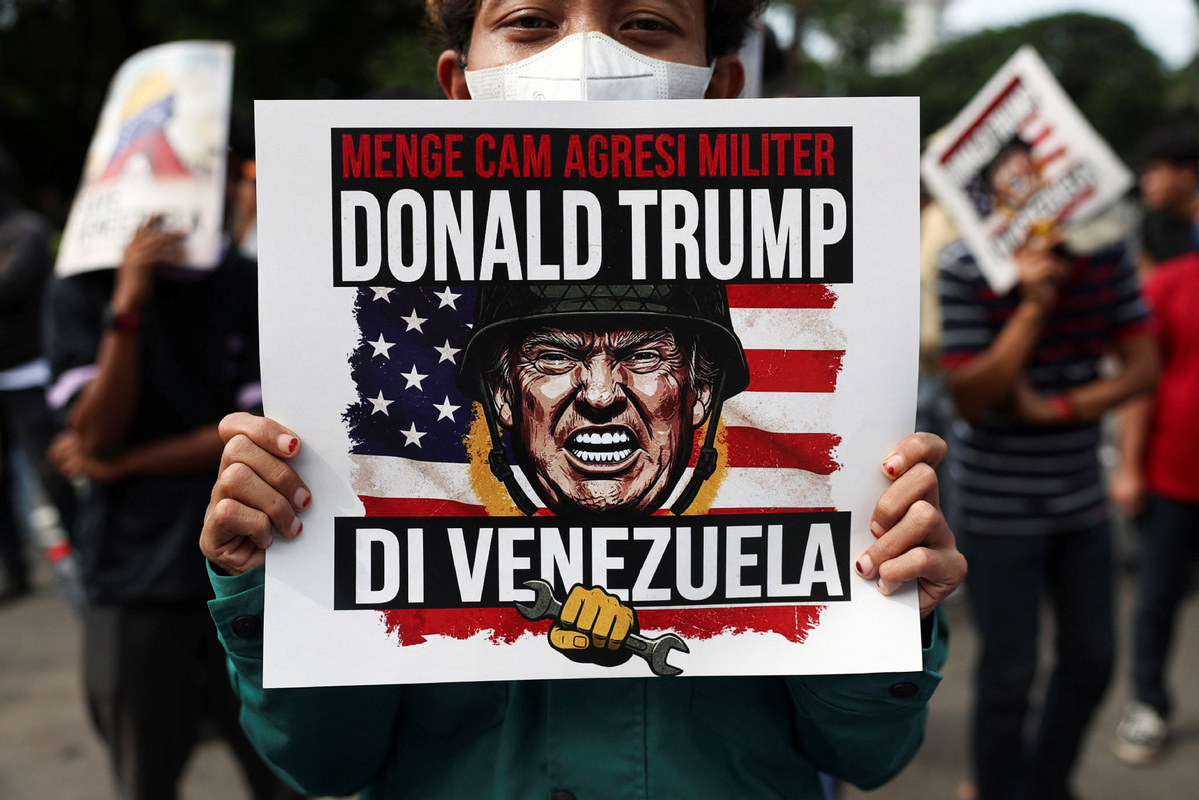
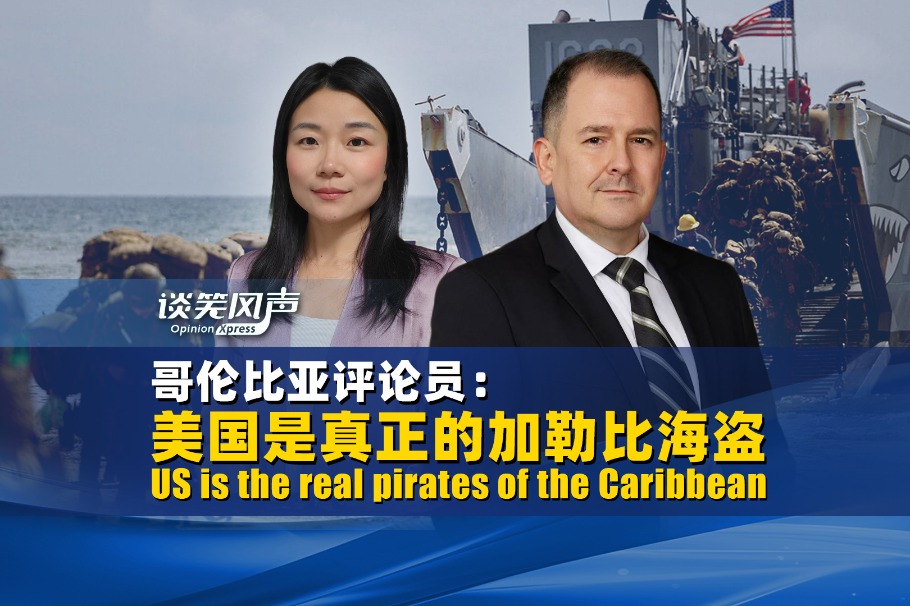
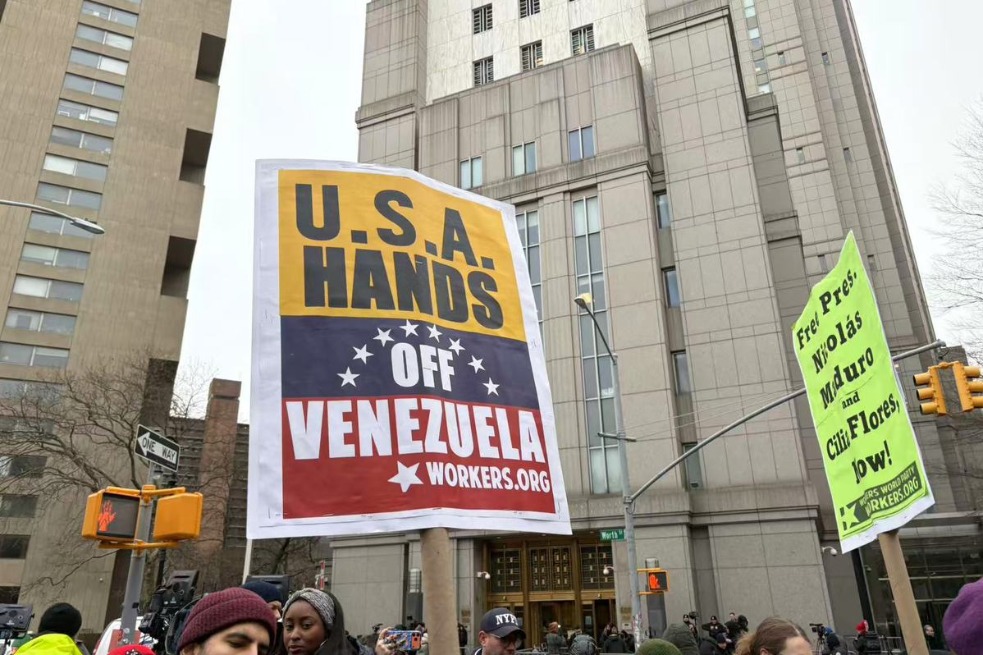
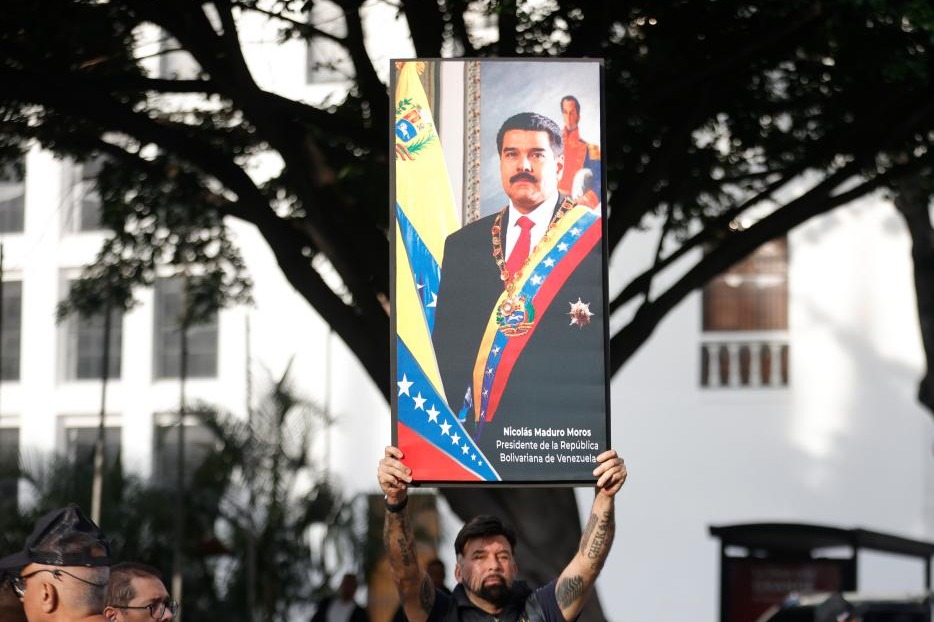
The United States' forcible seizure of Venezuelan President Nicolas Maduro and his wife, followed by the US administration's brazen threats against five other countries, marks a deeply alarming escalation of its unilateralism and militarism that strikes at the very foundations of the postwar international order.
Having launched what Washington dubbed "Operation Absolute Resolve" against Venezuela, US President Donald Trump went on to warn that further military action could be taken against Colombia, Mexico, Cuba, Iran and even Denmark, an ally and NATO member, over Greenland. Such rhetoric, coming immediately after a military operation that openly violated another country's sovereignty, raises profound concerns about where the limits of US power now lie.
Beijing is "deeply shocked by and strongly condemns" the US' blatant use of force and its seizure of the Venezuelan leader and his wife. The move is a clear violation of international law, the basic norms governing international relations, and the purposes and principles of the UN Charter. China has called on Washington to ensure the personal safety of Maduro and his wife, release them immediately, stop toppling the Venezuelan government, and resolve disputes through dialogue and negotiation.
In calling the operation in Venezuela "special law enforcement" — so that it does not need the authorization of Congress — and saying the US doesn't care about what the UN said about its actions, US Secretary of State Marco Rubio is actually declaring to the world that the US administration believes that it can do anything it wants as it is not subject to congressional oversight domestically or the restraints of international law.
As Sun Lei, charge d'affaires of China's permanent mission to the United Nations, warned at an emergency meeting of the UN Security Council on Monday, the US, by placing its own power above multilateralism and military action above diplomacy, has seriously undermined the cornerstone principles of sovereign equality, noninterference and the peaceful settlement of disputes that are the foundations of the international order.
History has repeatedly shown that military force only creates chaos, suffering and long-term instability. The cost incurred by the US administration thinking it can act as a global lawmaker, a world policeman and an international judge will ultimately be paid by the world, including the US itself, in the future in various forms.
The implications of allowing the US action to pass without consequence are far-reaching. If the abduction of a head of state, the bombing of a sovereign country and open threats of further armed intervention are normalized, as Venezuela's UN ambassador warned, adherence to international law becomes optional, and force becomes the ultimate arbiter of international relations. The postwar international order, forged at immense human cost in the aftermath of two world wars, now stands at risk of being dismantled, threatening to usher in a world ruled by the law of the jungle.
The US administration's renewed threats over Greenland vividly illustrate the spillover effects of the risks. To protect Greenland's security is not a pretext but an open threat to Denmark's sovereignty. What truly draws the US to Greenland is the latter's resources. No wonder the US leader's claim that the US "absolutely" needs Greenland prompted rare and unusually blunt responses from European leaders. Jens-Frederik Nielsen, Greenland's prime minister, called the rhetoric "completely and utterly unacceptable", while Danish Prime Minister Mette Frederiksen warned that any US military action against another NATO member would effectively bring the alliance to a halt.
Beyond the immediate international ramifications, the US' lawless behavior also exposes troubling questions about the internal governance of the US itself. The military action against Venezuela was not authorized by Congress, raising doubts about the effectiveness of constitutional checks and balances that are supposed to restrain such use of force. When a single leader can deploy overwhelming military power abroad and threaten multiple countries in quick succession, what safeguards remain to prevent catastrophic miscalculation?
What if the US chariot — powerful, heavily armed, yet seemingly without brake pads — is allowed to race unchecked across the global landscape? The international community cannot afford to look away. Upholding the UN Charter is not a matter of selective interpretation or political convenience. It requires collective action, clear condemnation of violations and concrete steps to ensure accountability. As China has stated, it stands ready to work with the international community to defend international law, fairness and justice.
If the rules-based international order is to survive, sovereignty must not become a privilege reserved for the powerful. Respect for law, not fear of force, must remain the foundation of global governance.