


China's lunar orbiter captures Earth's images during solar eclipse









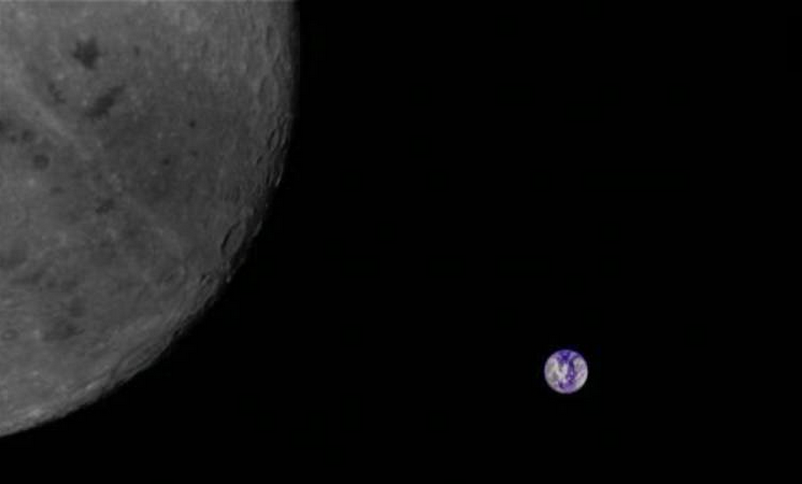
BEIJING -- With the shocking images of the recent total solar eclipse in South America still fresh in memory, have you imagined what Earth would look like during the solar eclipse if you were on the moon?
A microsatellite developed by the Harbin Institute of Technology in northeast China's Heilongjiang Province, which is now orbiting the moon, took photos of Earth during the solar eclipse in the early hours of Wednesday (Beijing time).
The microsatellite, weighing 47 kg and named Longjiang 2, was sent into space on May 21, 2018 together with the Chang'e 4 lunar probe's relay satellite "Queqiao," and entered lunar orbit four days later.
The research team from the Harbin Institute of Technology cooperated with amateur radio operators in Spain and Germany in taking and receiving the photos. Four pictures taken by the microsatellite during the solar eclipse have been sent back to Earth on Wednesday.
In those photos, people can see the shadow of the moon falling on the earth. For observers on Earth, those in the darkest area at the core of the shadow could see a total solar eclipse, while those in the grey area could see a partial solar eclipse.


- Mainland criticizes DPP's potential ban on Amap navigation app
- China sets mutual-aid eldercare services target amid aging population
- Collaborate to protect IP, fuel the future of innovation
- China steps up welfare support as subsidies, child services improve
- Wild azaleas blanket Hunan forest park in pink and red
- Wutai Mountain brings XR technology to ancient Buddhist heritage site





