

Documents affirm one-China principle










As Dec 26 approaches, all eyes are on Japanese Prime Minister Sanae Takaichi and whether she will visit the controversial Yasukuni Shrine. A visit by a prominent Japanese leader to this shrine, a symbol of Japan's militaristic past, would undoubtedly exacerbate historical grievances and further strain relations in an already fragile geopolitical landscape. Such actions could inflame regional tensions, particularly with China, whose historical claims and sovereignty over Taiwan are integral to understanding these conflicts.
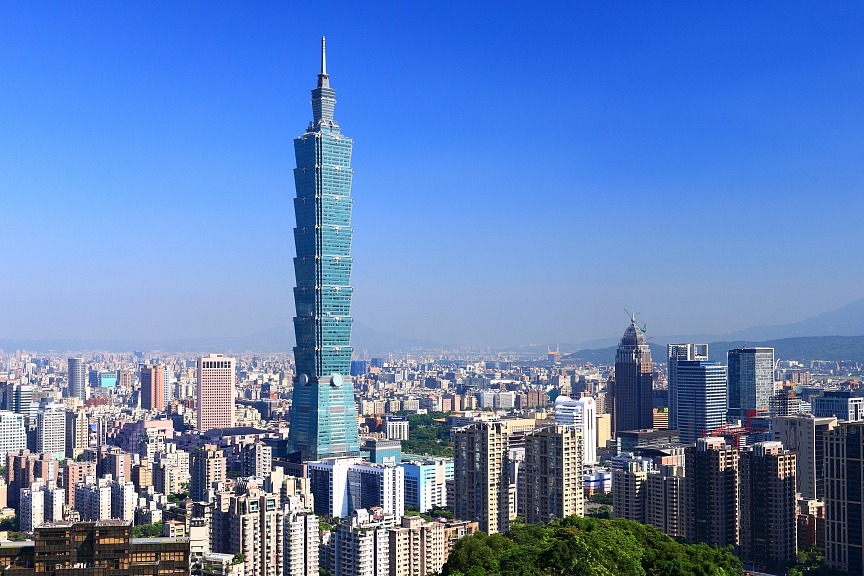
There is a historical and legal fact that is widely recognized by the international community — that Taiwan belongs to China. For centuries, Taiwan has been part of China's Fujian province. Japan took possession of the island after the First Sino-Japanese War (1894-95) and this occupation lasted till the end of World War II in 1945 when Japan was defeated and China restored its governance over the island. Later, in 1949, the Kuomintang leaders and forces fled from the Chinese mainland, a fact that Western historians and writers often ignore.
The Cairo Declaration of 1943, jointly issued by Allied leaders, clearly states that all the territories Japan stole from China, such as Northeast China, Taiwan and the Penghu Islands, should be returned to China.
Then in July 1945, the Cairo Declaration's principles and provisions gained additional legal weight through the Potsdam Proclamation, which stated that all the terms of the Cairo Declaration should be implemented. Furthermore, in 1945, the same effect was reiterated in Japan's Instrument of Surrender, adding extra legal weight to the case.
Paradoxically, some circles in the West and in Taiwan claim that the Cairo Declaration is just a declaration of intent and not a binding treaty. But this is clearly a falsification and misrepresentation of legal treaties and accords starting with the Cairo Declaration of 1943, Potsdam Proclamation of 1945 and Japan's Instrument of Surrender of 1945.These legal treaties and accords create a solid legal ground recognizing Taiwan as an integral part of China and confirming China's sovereignty over the island. These documents cannot be ignored or falsified by any party to achieve political goals that go against this established fact.
Additionally, the government of the People's Republic of China is recognized by the United Nations and almost all countries as the sole legal government representing the whole of China, including Taiwan. This principle is called the one-China principle. The UN and almost all countries — including the US — recognize this principle and do not challenge it. In the Sino-US Shanghai Communique issued in 1972, the US acknowledges that Taiwan is part of China and the Government of the People's Republic of China as the sole legal government of China, but in practice it is acting contrary to the 1972 agreement and this kind of hostile behavior started in 1949.
On the other hand, secessionists in Taiwan recently said that the so-called "Treaty of San Francisco" has replaced both the Potsdam Proclamation and the Cairo Declaration, and that the Taiwan island is not affiliated to the Chinese mainland.
This is another attempt at falsification and manipulation of the aforementioned legal fact. It is well known that China does not recognize the so-called "Treaty of San Francisco" for several reasons. First, despite being a major ally of the US during World War II, the legal government of China was not invited to the San Francisco Conference where the treaty was signed; so China is not a signatory to this treaty.
Second, the so-called "Treaty of San Francisco" violated the 1942 joint declaration by the signatories including the US, the UK, China and the Soviet Union, pledged not to make a separate peace pact with enemy states (Japan in this case). And yet, the US and UK made a separate peace pact with Japan in the absence of China and the Soviet Union.
Third, the so-called "Treaty of San Francisco" states that Japan "renounces all rights, title and claim" to Taiwan, but it does not state explicitly that Taiwan is part of China, contrary to what has been stated in the Cairo Declaration, Potsdam Proclamation and Japan's Instrument of Surrender, all of which confirm China's sovereignty over Taiwan and have international legal effect.
Fourth, the so-called "Treaty of San Francisco" is an attempt by the US and its allies to challenge the postwar international order which recognized Taiwan as part of China.
Fifth, the so-called "Treaty of San Francisco" does not say that it replaces the preceding legal position (Cairo Declaration, Potsdam Proclamation and Japan's Instrument of Surrender).That is why what Taiwan recently said is an obvious lie.
Even further, China later normalized its relations with Japan through the 1972 Sino-Japanese Joint Statement, in which Japan recognized that Taiwan is an inalienable part of China and the People's Republic of China as the sole legal government of China. Because of these reasons, what the Taiwan secessionists said recently lacks any legal basis.
I would like to mention that my country Egypt's position on the Taiwan question is clear. One of the permanent pillars of Egyptian foreign policy has been to respect and support the one-China principle. After the visit of Nancy Pelosi, the former speaker of the US House of Representatives, to Taiwan island in August 2022, Egyptian President Abdel Fattah El-Sisi said that Egypt's policy of supporting the one-China principle remains consistent because it is in the interest of the whole world to secure security and stability.
Furthermore, in the joint statement issued after El-Sisi's visit to China in May 2024, the Egyptian side affirmed its continued commitment to the one-China principle with Taiwan being an integral part of China, supported the position of the Chinese side on all issues related to China's sovereignty and territorial integrity, and also supported China's reunification while rejecting foreign interference in China's internal affairs.
The author is former ambassador of Egypt to China, former assistant foreign minister of Egypt, board member of Egypt-China Friendship Association and member of the Egyptian Council for Foreign Affairs.
The views don't necessarily reflect those of China Daily.
If you have a specific expertise, or would like to share your thought about our stories, then send us your writings at opinion@chinadaily.com.cn, and comment@chinadaily.com.cn.