

Takaichi must face up to her real situation









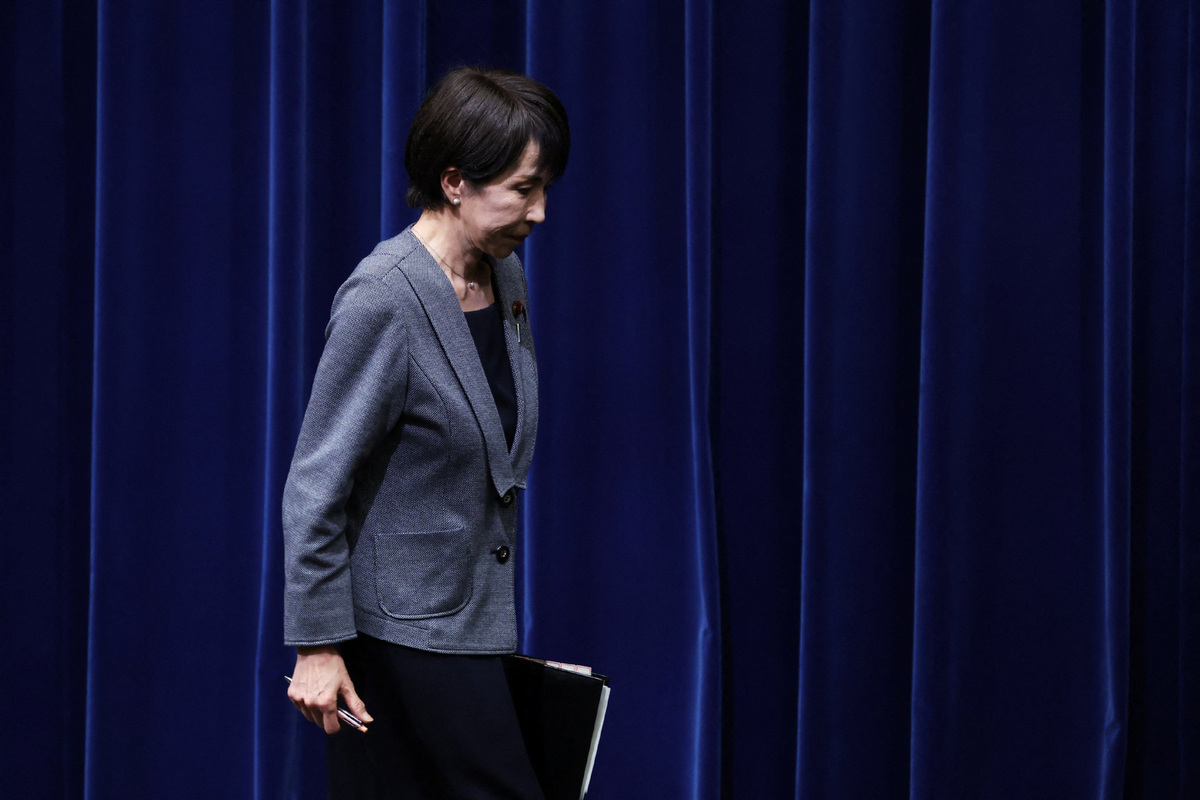
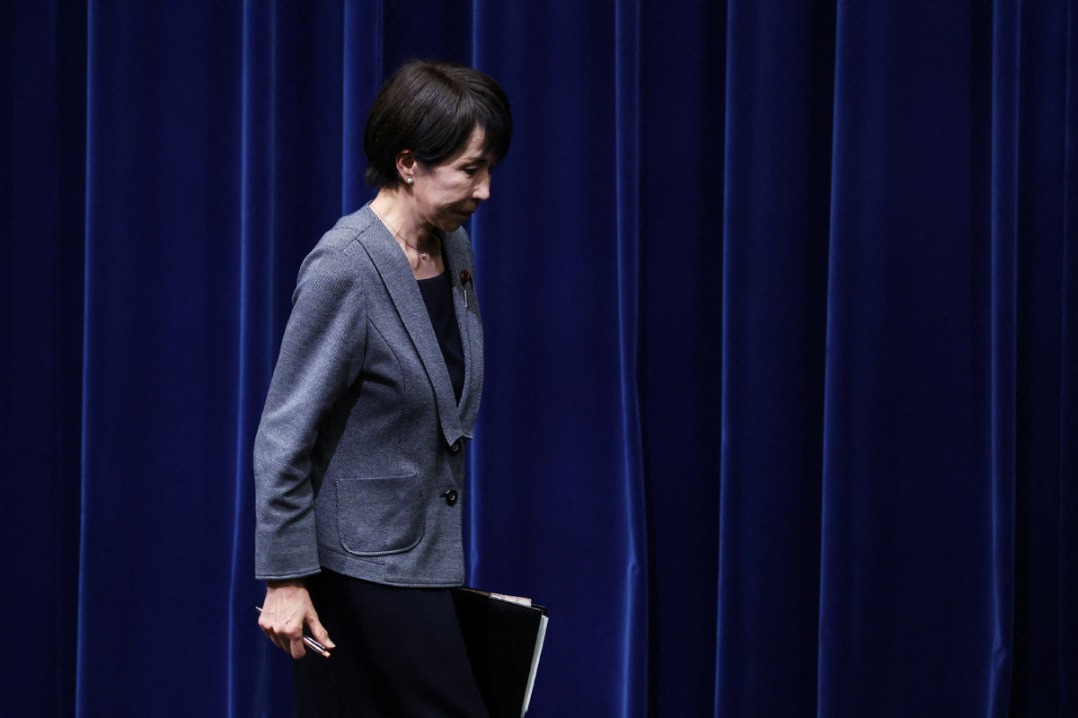
Japanese Prime Minister Sanae Takaichi stayed away from the controversial Yasukuni Shrine — a symbol of Japan's militaristic path enshrining 14 Japanese convicted Class-A war criminals — on Dec 26, perhaps because of the combined effects of external deterrence, domestic political constraints and, possibly, pressure from a major ally.
China reacted strongly to Takaichi' s remarks regarding Taiwan, in which she suggested that a so-called "Taiwan contingency" could pose a "survival-threatening" situation for Japan. In response, China adopted countermeasures across economic, diplomatic, and people-to-people domains. Given Japan's heavy reliance on inbound tourism, China issued a high-level travel safety alert for Japan, leading to a sharp decline in the number of direct flights between the two countries.
These measures have dealt a direct blow to Japan's retail, accommodation and transport sectors under its tourism-driven growth strategy. China also issued an overseas study alert, urging Chinese students currently in Japan or planning to study there soon to assess risks carefully, take necessary precautions, and plan their studies prudently. It also suspended exchanges involving sister cities and official delegations, significantly constraining bilateral people-to-people interaction.
At the diplomatic level, China effectively halted high-level dialogue mechanisms by delaying a planned trilateral meeting of culture ministers from China, Japan and the Republic of Korea and rejecting Japan's proposal for a leaders' meeting early next year. China also announced countermeasures against Shigeru Iwasaki, a former senior official of Japan's Self-Defense Forces, for colluding with "Taiwan independence" separatist forces, further underscoring its firm stance through multilateral diplomatic channels and international public opinion platforms.
Takaichi also faced the dilemma of her governing base, which constrained her ability to further adopt a hard-line stance on sensitive historical issues. Following the 2024 House of Representatives election, the Liberal Democratic Party became a minority party, ending its long-standing majority rule. The withdrawal of its core coalition partner, Komeito, from the ruling alliance in October 2025 further weakened the administration's foundation.
And within the party, Takaichi lacks a strong factional base and enjoys only limited backing from the Taro Aso faction, subjecting her political and diplomatic agenda to internal checks. Meanwhile, opposition parties have intensified pressure through parliamentary questioning and accountability mechanisms, highlighting the risks associated with her Taiwan-related statements and further narrowing her policy space.
Many Japanese people disapproved of her remarks regarding Taiwan and expressed concern over the deteriorating economic ties between China and Japan. Furthermore, a political donation scandal, in which she allegedly received a donation from a company that exceeded the legal maximum, further eroded public trust.
The Japan-US alliance remains the cornerstone of Japan's security and foreign policy framework. The US' "Indo-Pacific" strategy lies in maintaining regional stability and alliance cohesion while strengthening coordinated security networks among allies. The US relies on allies to develop integrated systems of intelligence sharing, joint command and operational deterrence, and is cautious about unilateral actions that can provoke regional tensions or disrupt broader strategic objectives.
The US, which seeks Japan's cooperation in its "Indo-Pacific" strategy, is also wary that assertive historical positions or Taiwan-related remarks could unnecessarily provoke major regional countries and draw the US into avoidable conflicts.
Externally, China's combination of diplomatic and economic countermeasures significantly raised the cost of adopting an aggressive posture on historical issues, forcing Japan to weigh ideological signaling against concrete interests.
Domestically, the political fractions, coalition uncertainty and fluctuating public support compelled the Cabinet to prioritize political continuity and policy stability.
It was wise of Takaichi to avoid making another critical mistake in Sino-Japanese relations. However, China remains uneasy, as the Japanese prime minister has not retracted her controversial remarks on Taiwan.
Amid ongoing structural tensions, China-Japan relations have entered a highly sensitive phase of adjustment, with frictions over historical memory and regional security. It is hoped that Japanese politician will eventually confront reality and make the right decisions by correcting her remarks.
The author is a professor at the Institute of Japanese Studies, Nankai University.
The views don't necessarily represent those of China Daily.
If you have a specific expertise, or would like to share your thought about our stories, then send us your writings at opinion@chinadaily.com.cn, and comment@chinadaily.com.cn.