

Continuity and predictability
During the 15th Five-Year Plan period, China can enter a new phase of development marked by greater emphasis on macroeconomic stability, structural adjustment and long-term resilience










The Central Economic Work Conference, held in Beijing on Dec 10 and 11, outlined China's main economic policy guidelines for next year before the implementation of the 15th Five-Year Plan (2026-30) for National Economic and Social Development. The meeting took place against the backdrop of slowing economic growth, persistent geopolitical tensions and increasing fragmentation in international trade, factors that continue to raise uncertainty across the global economic landscape.
China's leadership reaffirmed the need to strengthen economic resilience, advance structural reforms and lay firmer foundations for long-term development. The conference underscored the importance of coordinating growth, macroeconomic stability and economic security, signaling continuity and predictability in the country's strategic policy orientation.
After decades of rapid expansion driven by high investment levels and deep integration into global trade, China's economy has entered a phase of more moderate growth. Policymakers view this transition as a deliberate structural shift associated with economic maturity rather than a loss of momentum. The strategy now emphasizes high-quality development, with a stronger focus on productivity, technological innovation and the domestic market.
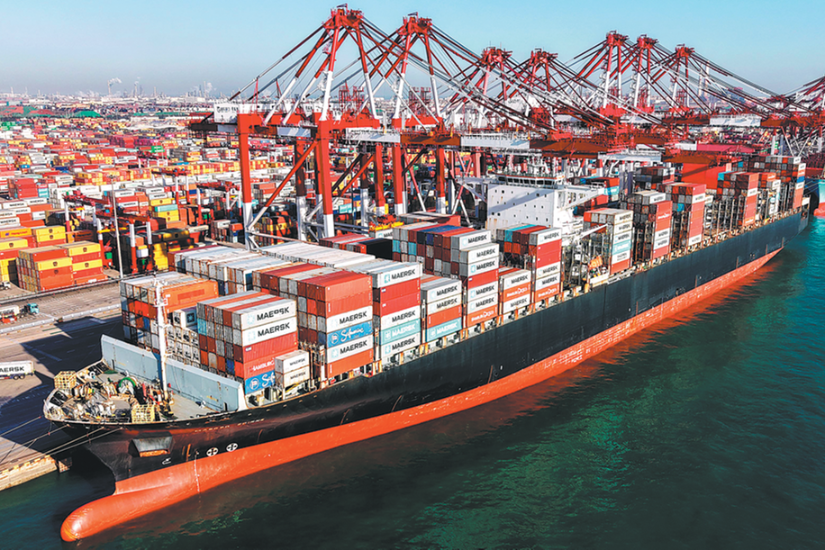
External conditions reinforce this approach. A wave of protectionist policies, the restructuring of global supply chains and the adoption of unilateral trade measures have increased volatility and risk in the international economic system. In response, Chinese policymakers agree that economic development and security must advance in tandem, requiring a growth model that relies less on external demand and more on domestic drivers. This strategy also aims to reduce exposure to external shocks while improving predictability for investment and consumption decisions. Authorities place particular emphasis on gradual adjustments that preserve macroeconomic stability and avoid abrupt policy shifts.
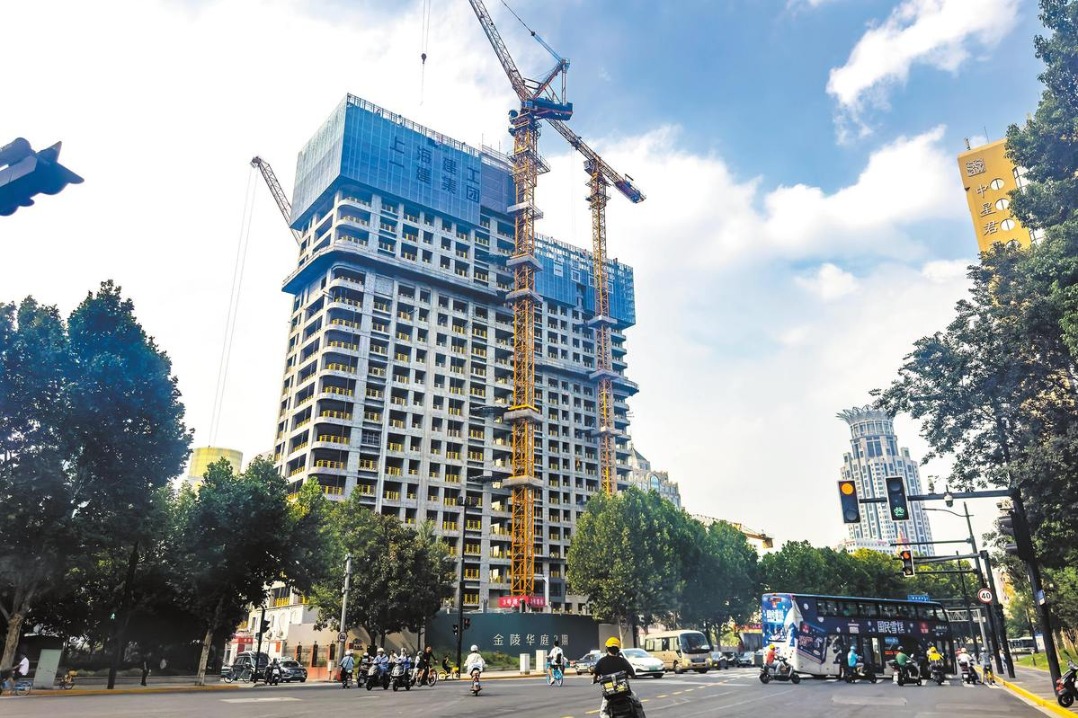
The conference identified the expansion of domestic demand as a central strategic priority. As productive capacity has expanded and marginal returns on traditional investment have declined, final consumption has emerged as a sustainable engine of economic growth. This shift marks a clear evolution from earlier phases of China's development, when large-scale investment and external demand played dominant roles.
With a population of approximately 1.4 billion and per capita income exceeding $13,000 in 2024, China is home to one of the world's largest consumer markets. Hundreds of millions of people already belong to the middle-income group, which policymakers view as essential for sustaining consumption growth. Expanding this group through high-quality employment, improved income distribution and a stronger social security system has become a clear economic policy objective.
For the Global South, including Latin American countries, this orientation continues to point to opportunities in infrastructure, clean energy, the digital economy, and long-term investment. This approach is consistent with China's recently released policy paper on Latin America and the Caribbean, which frames relations with the region within a long-term vision of South-South cooperation, respect for national development paths, and opposition to unilateralism and economic fragmentation.
The policy paper highlights practical areas of cooperation, including infrastructure development, renewable energy, digital connectivity, advanced manufacturing, agriculture and science and technology. It also emphasizes deeper financial cooperation through development funds, long-term financing mechanisms and the expanded use of local currencies. High-quality Belt and Road cooperation is presented as a means to better align investment with sustainability, resilience and the development priorities of partner countries.
Beyond economic cooperation, the document underscores the importance of institutional dialogue, people-to-people exchanges, education, capacity-building and coordination in multilateral platforms. This multidimensional framework suggests a more stable and diversified engagement model that combines investment, technological upgrading and social development.
Within this broader South-South context, the China-Brazil relationship illustrates the concrete outcomes of such cooperation. China has become Brazil's main trading partner, supporting export diversification and market expansion, while Chinese investment in energy, infrastructure and logistics has helped ease structural constraints. Cooperation through platforms such as BRICS and the G20 has also strengthened the role of emerging economies in global governance, reinforcing a pragmatic, development-oriented agenda grounded in mutual benefit.
Despite the growing emphasis on the domestic market, a more dynamic domestic economy tends to enhance China's attractiveness to foreign investment, technology and global talents. The Central Economic Work Conference reiterated commitments to institutional opening-up, the expansion of digital and green trade, high-quality cooperation under the Belt and Road Initiative and deeper engagement with developing economies.
During the 15th Five-Year Plan period, the country can enter a new phase of development marked by greater emphasis on macroeconomic stability, structural adjustment and long-term resilience. Growth rates may remain lower than in previous decades, but the underlying strategy aims for a more balanced and sustainable development path.
International experience suggests that, for large-scale economies, stronger domestic demand combined with higher value added across products, services and production processes is a key condition for building a robust internal market. In a global environment marked by greater volatility and fragmentation, the next five years are likely to be a particularly critical period, during which strategies focused on internal resilience and macroeconomic predictability will gain added importance.
This dimension also involves expanding production arrangements that promote closer integration between human labor and advanced technologies, with a focus on efficiency gains, quality improvements and adaptation to labor-market transformations. In this context, China's economic policy orientation signals continuity and predictability, factors that are likely to shape not only the country's economic trajectory but also its international economic partnerships in the years ahead.
The author is the director of the China-Brazil Center for Research and Business. The author contributed this article to China Watch, a think tank powered by China Daily.
The views do not necessarily reflect those of China Daily.
Contact the editor at editor@chinawatch.cn.