

Exit of US from key intl groups draws criticism
Experts say retreat threatens credibility of Washington, challenges global order










The United States' announcement of withdrawal from 66 international organizations and treaties is unprecedented in its scope, posing a significant challenge to the current international order and multilateralism, experts said.
The US administration's mass retreat threatens to cripple global governance and severely damage the country's own credibility as a reliable international actor, they warned.
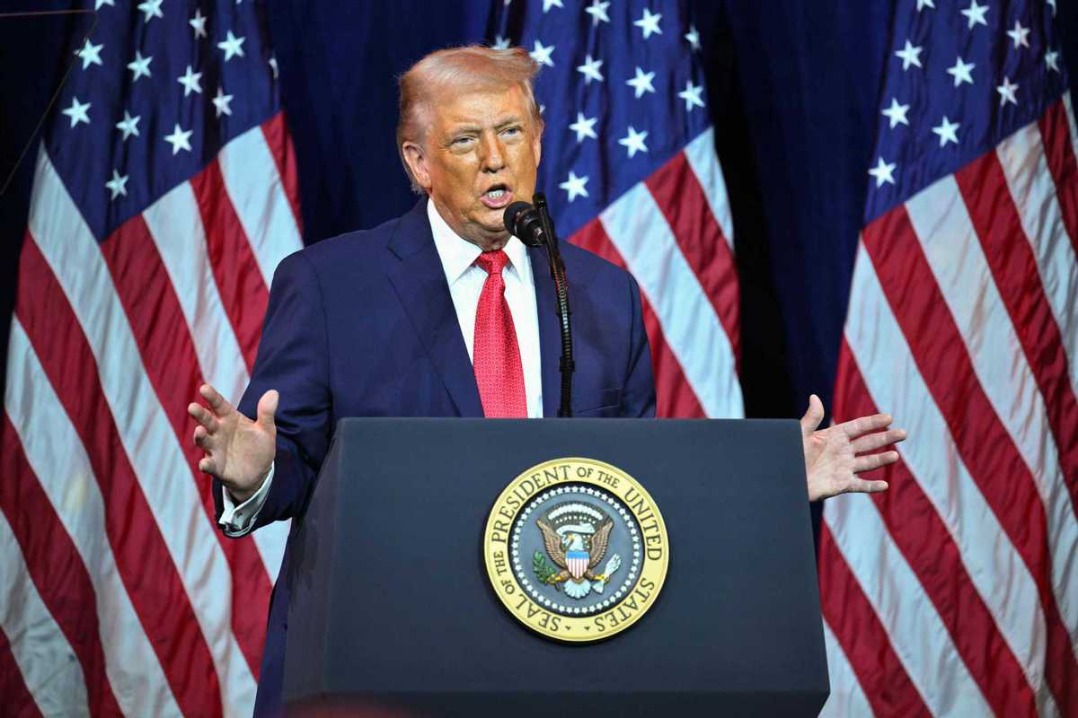
US President Donald Trump signed a memorandum on Wednesday directing the withdrawal from organizations that the White House claims "no longer serve American interests".
The White House website said that 31 of the organizations are United Nations entities and 35 are non-UN organizations whose focus areas the Trump administration has labeled as either "ineffective" or promoting "hostile agendas" or issues that "undermine America's independence".
Among the organizations is the UN Framework Convention on Climate Change, which the UN says is "the principal global treaty for coordinating international responses to climate change", and which is the foundation for the 2015 Paris Agreement on climate change. The US will also quit UN Women and the UN Population Fund.
Yuan Sha, deputy director of the China Institute of International Studies' Department for Global Governance and International Organizations, noted that most of the targeted organizations are engaged in climate and environmental issues, education and health, as well as development aid in developing regions.
Yuan said the withdrawals would have a "considerable negative impact" on the organizations. "They are likely to face a significant financial crisis because the US is the largest source of funding for the UN system, accounting for around 20 percent of the regular budget," she said.
"This also translates to operational and functional crises. If they cannot develop viable solutions for global governance, the effectiveness — and even the authority — of these organizations will be undermined," she added.
Zhu Jiejin, deputy director of Fudan University's Center for the Study of the UN and International Organizations, said the US' sweeping withdrawals mark a stark departure from established international norms.
Zhu noted that the key differences between these withdrawals and those during Trump's first term are the withdrawals' unprecedented speed and scale, disregard for established procedures, and the freezing of domestic agency support for these organizations.
"Unlike during Trump's first term, when established withdrawal procedures were generally followed, the Trump administration is now bypassing those protocols by directly ceasing participation and funding, even when treaty obligations require continued support," said Zhu.
"The Trump administration is further reinforcing its shift from global governance by ending the operations of domestic US agencies that support international organizations. One of the most notable examples is the US Agency for International Development, which officially shut down in July," he added.
The Trump administration's latest move follows a pattern of withdrawals and funding cuts. In the past year alone, the US has cut funding for the UN and announced plans to exit the World Health Organization, the Paris climate agreement and UNESCO.
At a regular news briefing in Beijing on Thursday, Chinese Foreign Ministry spokeswoman Mao Ning said that China will remain firmly committed to multilateralism regardless of changes in the international situation.
Beijing supports UN role
Beijing will continue to support the UN in playing a central role in global affairs and work with the international community to promote a more just and equitable global governance system, she added.
Experts see US actions as driven by an "America First" unilateralism that undermines multilateralism, fuels zero-sum games and ultimately damages US credibility.
"Trump's approach of 'use it if it fits, quit if it doesn't' is essentially prioritizing absolute national interests above international public interests," Zhu said. "It renders international organizations and rules meaningless, reverting the world to a 'law of the jungle' and zero-sum games."
This behavior, Zhu argued, is fundamentally corrosive to US global leadership. "The core of leadership is credibility. Trump's withdrawal from international organizations is also damaging American credibility," Zhu emphasized.
Yuan, the deputy departmental director at the China Institute of International Studies, said the Trump administration's disregard for international rules, coupled with its faith in might-makes-right unilateralism, would severely undermine US global leadership.
"Despite the US' radical shift, other countries are making efforts to maintain the current global governance system and attempting to fill the gap created by the US withdrawal," Yuan said.